BIT-101
Bill Gates touched my MacBook Pro




Hot on the trails of Coding Curves, I’m excited to announce my next writing project…
The Creative Coding Compendium, Volume I
Most of my books up to now have been focused on specific topics - fractals, chaos and strange attractors, or 2D curves. Or they’ve been targeted to specific coding platforms - Flash or iOS. For my next round of writing, I want to open up the flood gates and just write about creative coding. There are so many techniques I’ve learned over the years. And I’m excited to share them. I’m not trying to force any theme on them. Each chapter is standalone and has no solid connection the previous or next chapter.
Furthermore, I’m going all in on the pseudocode bandwagon. I wrote about so many cool coding topics in the 2010s, but all of those books are out of print. And while the principles in them are just as useful now as when I wrote them, the languages and platforms I wrote those books for are dead. Some of the early stuff involved putting code on animation frames in the Flash timeline and looping the timeline back to the frame with the code on it repeatedly in order to achieve animation - a technique that would leave most modern programmers scratching their heads. So going forward, I wanted to write code in a language that could not die - because it doesn’t exist.
A big part of the inspiration for this kind of book is Clifford Pickover’s early books, Computers and the Imagination, Computers, Pattern, Chaos and Beauty and Mazes for the Mind. These are wonderful books filled with crazy ideas and images, with source code written in BASIC. While the code is diligently commented and described in detail in the text, it’s not always the easiest stuff for a programmer in 2026 to parse.
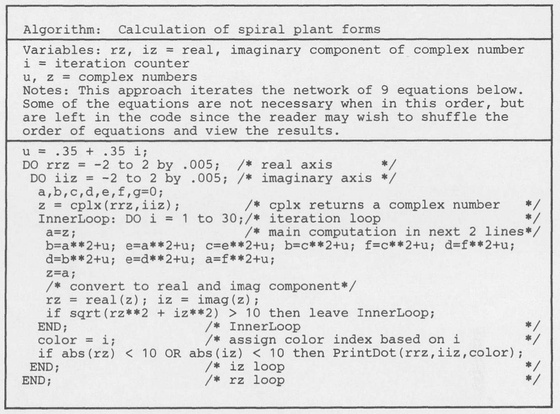
But it’s not impossible and it’s a lot of fun to just browse through one of his books, see an interesting image, convert the code over to some other language and start messing with it.
I’m hoping that this new book I’m working on, and any following it, can continue to have a long useful life ahead of them, no matter what programming looks like 20 years from now (assuming that humans are still writing code in 20 years… but I digress and make myself sad.)
Anyway, perhaps you’d like to see the table of contents.

Three hundred pages of projects, lots of code and graphics, concepts, suggestions of where to take things. And then three useful appendixes covering details related to other code in the book.
As of a week ago, all the chapters had completed first drafts with images and working code. I gave myself a week off and today started on first round editing. Cleaning up typos and weasel words and things that I read and say to myself, “what the hell was I trying to say here?”
When that’s all done, I’ll go through all the code and reproduce it in 2-3 different languages/frameworks. Likely vanilla JavaScript/Canvas, Processing, and Python with PyCairo. Just to make sure that I’m not telling people to do things that will be impossible in any of the more common platforms. Or at least to be able to say, “hey watch out if you’re using platform X, you’ll need to do this…”.
That may result in some more copy changes. And after that I’ll go through the whole book from top to bottom at least one more time making sure it’s as good as it can be.
So… many more weeks of work on this. But I’m very excited about it.
As you may have noticed, this one has “Volume I” in the title. My initial brainstorm came up with enough subjects for at least two books, so a second volume is my intention. Maybe more? Who knows. Let me get through this one at least.
Without getting too philosophical about things, as I get older I do think about what I will leave behind. Especially in a world where I suspect people won’t really be learning to code much longer. Not in the same sense that we think of “learning to code”. They’ll tell a computer what they want, and some code will be generated, which may or may not be viewed, and only partially understood if anyone does view it. So if I can leave some artifacts behind about what it was like in the old days, that will make me a little less sad about where things are headed.
Anyway, stay tuned for more updates.
Here are a few sample images from the book: